In-House Delivery Drivers vs. a Courier Service: The Real Cost
In-house delivery with one driver and one van costs about $76,000 a year before fuel. See the math, the cost per delivery, and when a courier service fits.
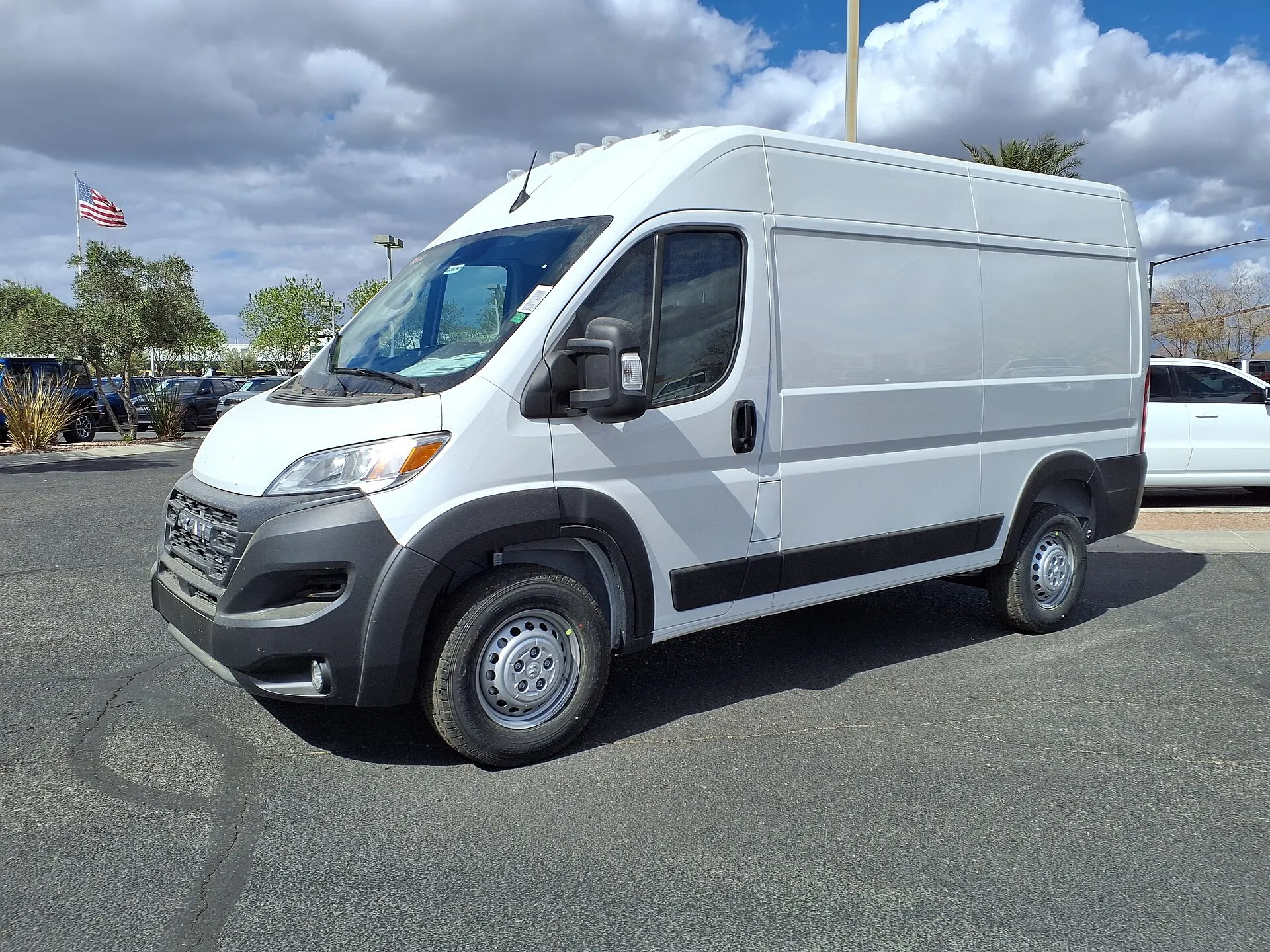
One in-house delivery driver and one cargo van cost about $76,000 a year before fuel and maintenance, and you pay that whether the van makes 5 deliveries a day or 30. A courier service bills per delivery instead. So in-house delivery is cheaper only when you can keep your own driver busy nearly every working day.
This guide builds that figure line by line from published wage, benefit, van, and insurance data, then divides it by three delivery volumes. Every assumption is labeled, so you can swap in your own numbers.
Key takeaways
- One driver at the 2025 median wage plus one 2026 Ford Transit cargo van comes to about $76,258 a year, before fuel, upkeep, and a one-time hiring cost.
- That fixed cost works out to $58.66 per delivery at 5 deliveries a day, $19.55 at 15, and $9.78 at 30.
- Wages are only about 70% of what an employee costs. Benefits and required employer taxes average the other 30%, according to BLS.
- You generally can’t turn an employee driver into a contractor by relabeling the job, and an employer usually answers for an employee’s crash at work.
- A hybrid setup keeps your own driver on the dense core route and sends peaks, absences, and new areas to couriers.
What does one in-house delivery driver and van cost per year?
About $76,258 a year in recurring cost, plus about $5,475 once for hiring, under the assumptions below. The model is one driver and one van, the smallest delivery fleet a caterer, bakery, florist, meal prep company, or wholesaler can run.
- Hours (assumption): 2,080 paid hours a year (40 hours for 52 weeks), with no overtime.
- Benefits (assumption): your benefit costs match the private-industry average share of pay.
- Van (assumption): you buy a base van at starting MSRP, pay no loan interest, and write it off evenly over five years with no resale value.
- Insurance (assumption): you pay the median premium.
| Cost line | Arithmetic | Annual cost |
|---|---|---|
| Wages | $21.57 x 2,080 hours | $44,866 |
| Benefits and employer taxes | $44,866 x 30/70 | $19,228 |
| Van | $48,400 / 5 years | $9,680 |
| Commercial auto insurance | $207 x 12 months | $2,484 |
| Recurring annual total | Sum of the four rows | $76,258 |
| Hiring (one time) | Average cost per hire | $5,475 |
| First-year total | $76,258 + $5,475 | $81,733 |
Where each number comes from
Wages. The median wage for light truck drivers was $21.57 an hour in May 2025 (BLS). BLS lists $44,860 a year for the job, which matches the table within rounding. Driver/sales workers had a lower 2025 median: $18.64 an hour, or $38,770 a year (O*NET).
Benefits and employer taxes. In June 2026, private-industry employers paid an average of $46.89 an hour in total compensation: $32.82 in wages (70.0%) and $14.07 in benefits (30.0%) (BLS Employer Costs for Employee Compensation). So benefits equal wages x 30/70. That benefit figure already includes legally required taxes, which is why the table has no separate payroll tax row. For scale, employer Social Security (6.2%) and Medicare (1.45%) on $44,866 total $3,432 at 2026 rates (IRS Topic 751), and federal unemployment tax adds $42, which is 0.6% of the first $7,000 after the full state credit (IRS Topic 759). Don’t add either one again.
Van. The 2026 Ford Transit cargo van has a starting MSRP of $48,400 before destination charges (Ford).
Insurance. Progressive’s business auto customers paid a median of $207 a month per vehicle in 2025, and an average of $276, for new policies with liability plus physical damage and a clean record (Progressive Commercial). Insureon reports an average of $245 a month for its small-business customers (Insureon, March 2026).
What the table leaves out
The table has no row for fuel, maintenance, tires, or repairs, so treat $76,258 as a floor. We didn’t use the IRS mileage rate to fill the gap, because that rate already includes depreciation and insurance. Adding it on top of the van and insurance rows would count both twice.
A second way to estimate vehicle cost
If the business already owns the car it would deliver in, use the IRS business mileage rate in place of the van and insurance rows. The rate is 72.5 cents a mile for January through June 2026 and 76 cents for July through December 2026 (IRS). Assume 12,000 business miles a year (an assumption; check your own odometer). At 76 cents, that’s 12,000 x $0.76 = $9,120. Add $64,094 in wages and benefits and the annual total is $73,214.
AAA offers a benchmark for personal vehicles only: $12,863 a year for a new vehicle in 2026, averaged over five years and 75,000 miles, with $4,422 of that in depreciation (AAA). The study doesn’t cover cargo vans, so use it as a sanity check, not a van quote.
What does in-house delivery cost per delivery?
$58.66 per delivery at 5 deliveries a day, $19.55 at 15, and $9.78 at 30. The annual bill stays the same while the delivery count changes. The table assumes 260 working days a year (5 days for 52 weeks).
| Deliveries per working day | Deliveries per year | Cost each (recurring, $76,258) | Cost each (first year, $81,733) |
|---|---|---|---|
| 5 | 1,300 | $58.66 | $62.87 |
| 15 | 3,900 | $19.55 | $20.96 |
| 30 | 7,800 | $9.78 | $10.48 |
Idle time is what makes in-house delivery expensive. $76,258 over 260 days is $293.30 per working day, owed whether or not the van leaves the lot. A florist with a quiet Tuesday still pays it.
The high-volume row is hard to reach. 2,080 hours over 260 days is an 8-hour day, so 30 deliveries means one every 16 minutes, loading included. That only works on a dense route. At 5 a day, each delivery carries 96 minutes of paid time.
A courier service bills only for the deliveries you send, which is the case for delivery outsourcing at low or uneven volume. We don’t quote a flat rate here, because the price depends on distance and drive time, the number of stops, vehicle size, and how soon the pickup is. Enter a typical pickup and dropoff in the delivery cost calculator to get a price range in about a minute, then set it beside your row in the table.
What does the wage figure leave out?
The wage row pays for 2,080 hours of one person. It doesn’t cover the days that person is out, or the cost of replacing them. Three gaps matter when you’re hiring delivery drivers.
- Sick days and time off. Orders still have to go out. Someone else drives, possibly you, or deliveries slip. The table has no backup driver in it.
- Turnover. The monthly quits rate in transportation, warehousing, and utilities was 1.9% in August 2026 (preliminary) and 2.8% in May 2026 (BLS JOLTS). That sector is wider than delivery driving, so read it as a rough signal.
- Rehiring. Every departure repeats the hiring cost. SHRM’s 2025 benchmarking put the average cost per hire at $5,475 for nonexecutive roles (SHRM). That average covers all nonexecutive jobs, not drivers specifically.
Who is liable when your driver crashes during a delivery?
Usually the employer. Under respondeat superior, an employer answers for an employee’s negligence within the scope of employment (Cornell Legal Information Institute). The doctrine generally doesn’t extend to independent contractors, and the tests vary by state.
Having staff use their own cars doesn’t take you out of the picture. When an employee drives a personal car for work, the employee’s policy usually pays first and the employer’s pays next (FindLaw, 2024).
With a courier service, the drivers aren’t your employees. Ours are independent local couriers. That changes the picture, but it doesn’t remove every risk, so ask your insurer how your policy treats outsourced deliveries. This guide is general information, not legal, tax, or insurance advice.
Can you pay your delivery driver as an independent contractor?
Generally, no. You can’t turn an employee into a contractor by changing the label. The IRS weighs three factors (IRS):
- Behavioral control. Who decides how the work gets done.
- Financial control. Who controls the business side of the job.
- Relationship of the parties. How the two sides have set up the arrangement.
A driver who works the hours you set, in your van, on the route you assign, is likely to look like an employee under those factors.
Federal wage law has its own test, and it’s changing. The Department of Labor’s 2024 six-factor “economic reality” rule is still on the books, but the agency stopped applying it in investigations in May 2025 and proposed a replacement in February 2026. As of October 2026 there is no final rule (DOL). Check current guidance before you set up any contractor arrangement.
Which setup fits: in-house, a courier service, or both?
In-house fits a full, steady route. A courier service fits low or uneven volume. If you sit between the two, a hybrid covers the middle.
The hybrid setup
Keep your own driver on the core route (the dense, repeating stops that fill the day) and send the rest to couriers.
- Peaks. A catering courier service can take the Friday when three events land at once, with no second van to buy.
- Absences. A sick day or a vacation week no longer stops orders.
- New areas. A wholesale delivery service lets you test a new suburb before you commit a driver to it. The same goes for a new metro: a courier service in Chicago or a courier service in Houston saves you from basing a van there. Our city pages cover 100 US metro areas.
Courier bookings can be same-day, scheduled, recurring, or multi-stop, in SUVs, minivans, and cargo vans. You keep a preferred list, and preferred couriers are offered your next pickup first, so overflow can go to people who already know your product. Our courier service for local businesses page has the details.
In-house, courier, or hybrid: a quick decision table
| Your situation | Best fit | Why |
|---|---|---|
| A dense route that fills an 8-hour day, five days a week | In-house | The fixed cost spreads thin, toward $9.78 a delivery in this model |
| A few deliveries a day, or uneven weeks | Courier service | You pay per delivery, not $293.30 for an idle day |
| A steady core route plus seasonal or event peaks | Hybrid | Your driver stays full and couriers absorb the spikes |
| One driver and no backup | Hybrid | Couriers cover sick days, vacation, and resignations |
| Testing a new delivery area or metro | Courier service | No second van or hire until demand is proven |
Frequently Asked Questions
Is it cheaper to hire a delivery driver or pay a courier per delivery?
It depends on volume. In this guide’s model, one driver and one van cost $76,258 a year, which is $58.66 per delivery at 5 a day and $9.78 at 30. Get a range for your own route from the delivery cost calculator and compare.
How many deliveries a day justify buying a van?
There’s no single number. In this model, 15 deliveries a day cost $19.55 each and 30 cost $9.78, before fuel and upkeep. A van earns its place when your slow-week volume keeps your own cost per delivery below a courier price for the same route.
Can I pay my drivers as independent contractors?
Not by relabeling them. The IRS looks at behavioral control, financial control, and the relationship of the parties, and the Department of Labor’s rule is being revised. Check current guidance before you set anything up.
Who is liable if my driver crashes during a delivery?
Usually the employer, when the driver is an employee acting within the scope of the job. That’s the doctrine of respondeat superior, and the tests vary by state (Cornell Legal Information Institute). If the employee was in a personal car, their policy usually pays first and yours pays next.
Can I keep my own driver and use a courier for overflow?
Yes. Your driver runs the core route and couriers take peaks, absences, and new areas, booked same-day, scheduled, or recurring. You pay for the extra capacity only on the days you use it.
The Bottom Line
In-house delivery is a fixed cost: about $76,258 a year for one driver and one van in this model, before fuel and upkeep. It pays off when a dense route fills nearly every working day. Below that, each idle hour raises your cost per delivery, and paying per delivery deserves a hard look. If you sit in between, keep your driver on the core route and send peaks and new areas to couriers. Run your own numbers first: divide your annual cost by your real delivery count, then compare the result with a price range from the delivery cost calculator.